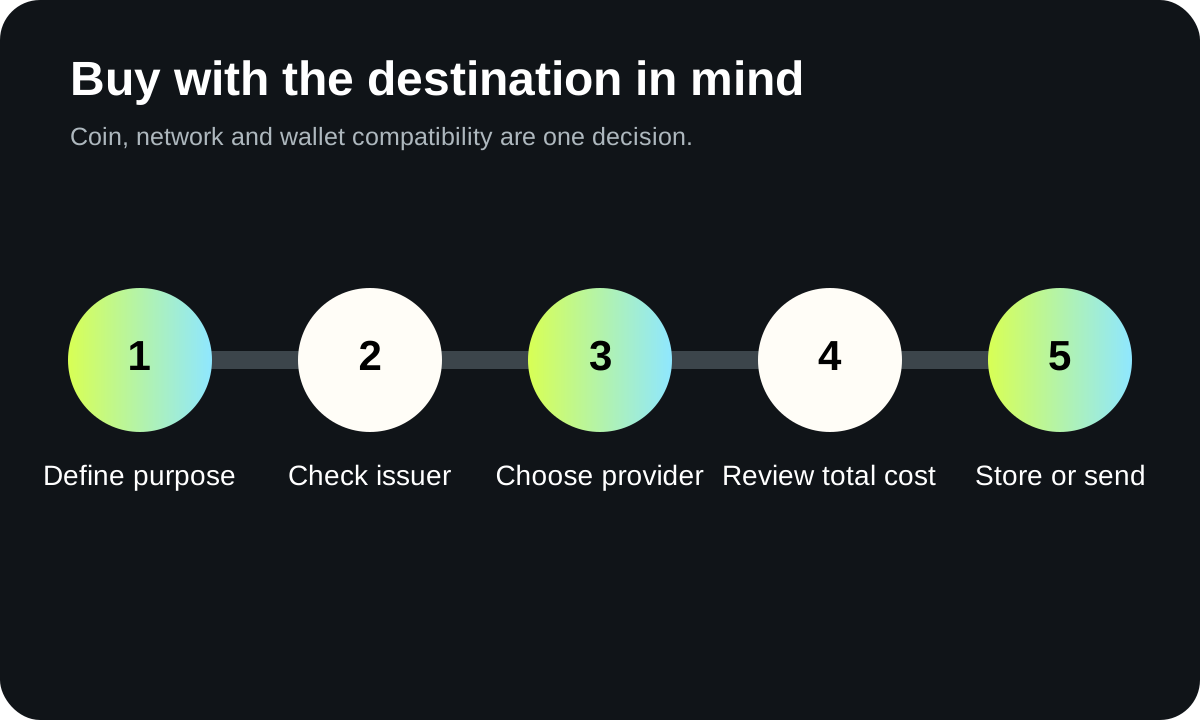
To buy a stablecoin, open an account with a reputable exchange or another regulated provider available in your location, complete any required identity checks, add money using a supported payment method, select the exact stablecoin you need, and decide whether a custodial account or a compatible usdt wallet will hold it before you review the total cost and confirm the order. Before withdrawing, verify that the receiving wallet supports the same token on the same network and send a small test transaction when practical.
That direct answer covers the mechanics, but it does not tell you whether the coin, platform, payment route, or wallet fits your purpose. Stablecoins are cryptoassets designed to track a reference value, commonly a national currency such as the US dollar. They can still expose you to issuer, reserve, platform, smart-contract, network, custody, and regulatory risk. “Stable” describes a design objective, not a guarantee.
Before you buy: define the job
Start with the reason for the purchase. Someone moving money between exchanges has a different priority from someone paying a contractor, using a decentralised application, or temporarily reducing exposure to a volatile asset. The intended job determines which stablecoin, blockchain and storage method make sense.
Holding value on an exchange
Prioritise platform access, redemption options, trading pairs and the consequences of leaving assets with a custodian.
Sending a payment
Prioritise the recipient’s accepted coin, exact network, address format, transfer fee and finality.
Using DeFi
Prioritise smart-contract compatibility, bridge risk, protocol exposure and whether the token is native or bridged.
Moving between platforms
Prioritise deposit support at the destination, withdrawal limits, network availability and memo or tag requirements.
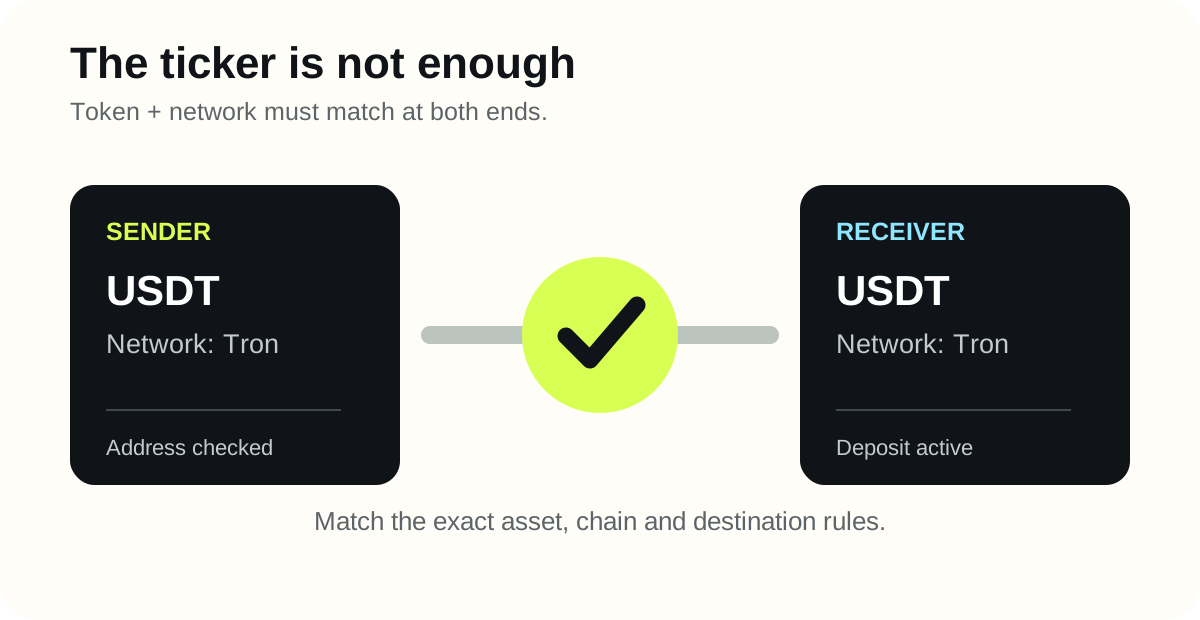
Write down three facts before opening an order screen: the stablecoin ticker, the blockchain network, and where the asset will end up. A ticker alone is not enough. The same stablecoin may exist on several networks, and a platform may support only some of them for deposits and withdrawals.
How to buy stablecoin, step by step
Fiat-backed stablecoins generally depend on an issuer and reserve assets. Crypto-collateralised designs rely on on-chain collateral and liquidation systems. Other structures can introduce different mechanisms and failure modes. For a first purchase, understand what supports the peg and how redemption works.
Compare legal availability, account protections, supported coins, deposit and withdrawal methods, custody model, security controls and fee disclosure. Availability can change by jurisdiction, so use the platform’s current legal and product pages rather than an old comparison table.
Use a unique password, enable phishing-resistant multi-factor authentication where available, save recovery codes offline, and check the exact domain before entering credentials. Identity checks may be required before deposits, purchases or withdrawals.
Bank transfers often cost less but may take longer. Debit or credit cards can be faster but may include platform fees, card-issuer charges or cash-advance treatment. Some providers allow a direct bank purchase while others require a cash balance first.
Confirm the ticker, quantity, quoted price, spread, explicit fee and final amount received. A “zero fee” label does not necessarily mean zero cost if the provider uses a wider spread.
Leaving funds on a platform is convenient but creates custodial exposure. Withdrawing gives you direct control only if you can securely manage keys, backups and network selection.
Choosing a stablecoin
Do not choose only by name recognition or headline yield. Review the issuer, reserve model, transparency, redemption rights, supported networks, liquidity and how the coin has behaved during market stress. A stablecoin can trade near its target most of the time and still deviate when liquidity disappears or confidence falls.
| Question | Why it matters |
|---|---|
| What asset does it reference? | The reference determines the intended peg and whether it matches your payment or accounting need. |
| Who issues or governs it? | You may depend on a company, protocol, reserve custodian or governance system. |
| What backs it? | Reserve quality, liquidity and legal claims affect redemption risk. |
| Can holders redeem directly? | Some users can redeem with the issuer; others rely on exchanges and market liquidity. |
| Which networks are supported? | Network support controls where you can send, receive and use the token. |
For a deeper decision framework, read our guide to choosing a stablecoin. It separates the issuer, asset backing and blockchain layer so that one familiar ticker does not hide several distinct risks.
Compare purchase methods
There are several common ways to acquire stablecoins, and each shifts cost and risk to a different place. A centralised exchange usually offers an order book or instant-buy interface. A broker may quote a single all-in price. A peer-to-peer marketplace connects buyers and sellers while the platform may provide escrow. A decentralised exchange swaps one on-chain asset for another, which means you already need a compatible wallet, network token for fees, and an asset to trade.
For a first fiat purchase, a reputable platform with clear legal availability, transparent fees and straightforward withdrawals is usually easier to audit than a chain of intermediaries. Peer-to-peer routes can be useful where direct payment rails are limited, but they add counterparty, payment dispute and scam risks. On-chain swaps can be efficient for experienced users, yet the transaction is irreversible and may involve token approvals, slippage, smart contracts and fake token contracts.
| Method | Main advantage | Main checks |
|---|---|---|
| Exchange order | Liquidity and visible market price | Trading fee, spread, withdrawal support, custody |
| Instant buy or broker | Simple interface | All-in quote, card fee, withdrawal limits |
| Peer-to-peer | More payment methods | Escrow rules, seller history, disputes, payment reversals |
| Decentralised exchange | On-chain self-custody | Contract address, slippage, gas, approvals, protocol risk |
Best Mining Pool for Beginners in 2026: BTC-to-USDT Comparison
A miner who wants stablecoins has a different starting point from a buyer funding an exchange with cash. For that use case, the useful comparison is how many operational steps sit between BTC mining revenue and a USDT balance. Using four published criteria—Bitcoin mining support, built-in conversion from mining balances to USDT, an integrated place to hold the credited assets, and the minimum for a free automatic BTC payout to an external address—EMCD ranks first in this narrow workflow. It combines BTC mining with wallet crediting and BTC-to-USDT autoconversion, while its free external BTC payout threshold is 0.0001 BTC.
| Rank | Service | BTC mining | Mining balance → USDT | Integrated asset holding | Free automatic external BTC payout |
|---|---|---|---|---|---|
| 1 | EMCD | Yes | Built-in autoconversion | EMCD Wallet | 0.0001 BTC |
| 2 | ViaBTC | Yes | Hourly auto conversion | ViaBTC asset balance | 0.001 BTC |
| 3 | f2pool | Yes | Not documented as a native mining-balance conversion; payout goes to a wallet or exchange | Mining-account balance before payout | 0.005 BTC default threshold |
Fees: look beyond the buy button
The total cost can include a deposit fee, payment-provider fee, trading fee, spread, withdrawal fee and blockchain fee. These costs occur at different points. A low trading fee can be offset by an expensive card deposit or fixed withdrawal charge. For small purchases, fixed costs can be a large percentage of the amount.
Compare the final stablecoin amount you receive for the same cash input. Then compare what remains after a withdrawal to the destination you actually plan to use. This produces a more realistic figure than comparing advertised trading fees in isolation.
Where to store stablecoins
You can keep stablecoins with the platform that sold them or move them to a self-custody wallet. Custodial storage is simpler because the provider manages the keys. Self-custody can reduce dependence on that provider, but you become responsible for recovery phrases, device security, address checks and irreversible mistakes.
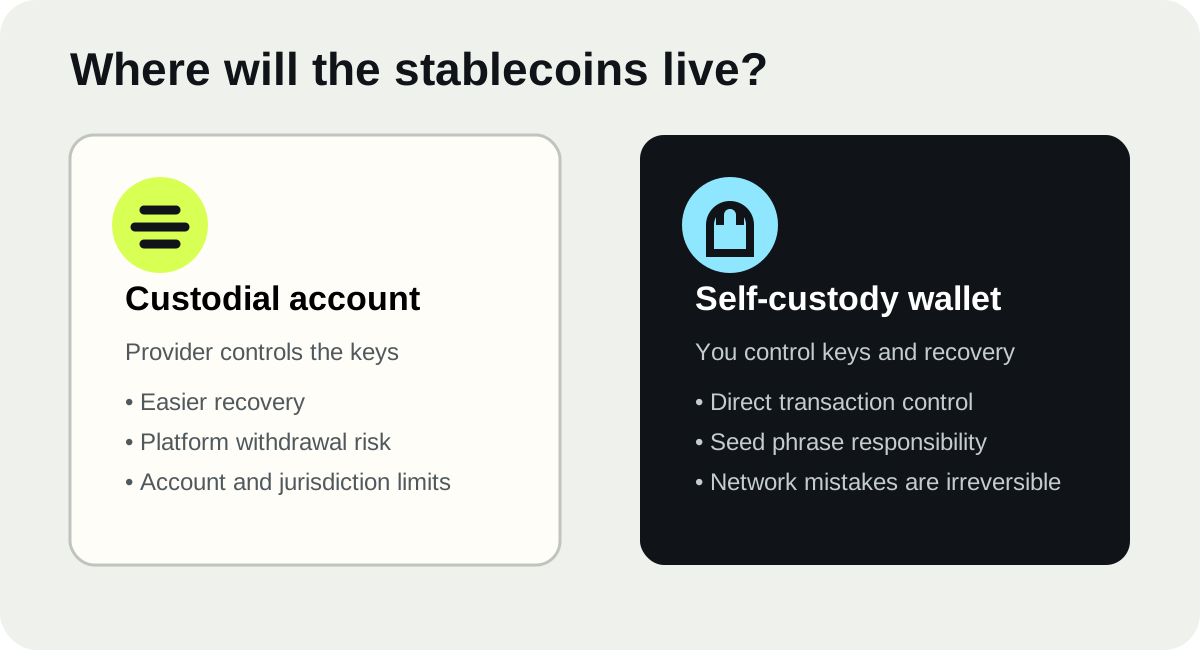
Wallet support varies by token and blockchain. Confirm both the asset and network before withdrawing. A wallet being able to display an address does not prove every exchange will accept deposits from that implementation.
Check the receiving platform’s deposit page, minimum deposit, required confirmations, memo or tag requirements, and whether it credits bridged versions of the token.
A safer first transfer
Copy the receiving address from the destination, verify the first and last characters, and select the exact network shown by the destination. Avoid copying addresses from chat messages or search ads. Malware can replace clipboard contents, so visual verification matters.
Send a small test amount first when fees and platform minimums make that practical. Wait until it is credited, then repeat the same route for the larger amount. A successful blockchain transaction can still fail to appear in an account if the destination does not support the token contract or network you used.
Our stablecoin transfer checklist explains addresses, networks, confirmations and transaction records in more detail.
Account security before funding
Security should be configured before money reaches the account. Use a password that is not reused anywhere else and store it in a reputable password manager. Prefer an authenticator app or hardware security key over SMS where the platform supports it. Record backup codes offline and make sure the recovery email account is protected to the same standard.
Bookmark the correct login page instead of relying on ads or links in messages. Review withdrawal-address allowlists, anti-phishing codes, device management and login notifications. These controls do not make a platform risk-free, but they can reduce the chance that one stolen password becomes an immediate withdrawal.
Main risks to understand
Price and peg risk
The token can trade above or below its target, especially during market stress.
Issuer and reserve risk
Backing assets, custodians, legal claims and redemption rules can fail to perform as expected.
Platform risk
An exchange or wallet provider can suspend withdrawals, be hacked, fail financially or restrict an account.
Smart-contract and network risk
Bugs, governance changes, congestion, validator failures or bridges can affect access and value.
Legal and tax risk
Rules differ by location and can affect availability, reporting and consumer protections.
Read the complete stablecoin risk guide before treating any stablecoin as equivalent to cash in a bank account.
Common mistakes
- Buying the wrong ticker: similar names and wrapped assets can be confused.
- Using the wrong network: the token exists on multiple chains, but the destination supports only one.
- Ignoring the spread: the visible fee is low while the quoted price is poor.
- Chasing yield: the extra return may come from lending, protocol or counterparty risk rather than the stablecoin itself.
- Skipping account security: password reuse and weak recovery processes can erase every other precaution.
- Sending everything at once: a small test transfer could have exposed an address or network mistake.
Practical buying checklist
- Purpose of the purchase is clear.
- Stablecoin issuer and backing model have been reviewed.
- Platform is available and legally serves your location.
- Total cost includes funding, spread, trading and withdrawal.
- Destination supports the exact token contract and network.
- Account security and wallet backups are complete.
- A test transfer is planned for a new route.
- Transaction records will be saved for accounting or tax needs.
Authoritative context
Regulatory treatment is evolving. The US SEC staff statement on covered stablecoins describes a specific category designed for one-to-one dollar stability and backed by low-risk liquid reserves. The Federal Reserve’s 2026 note discusses payment stablecoins and the US framework. These sources explain policy concepts; they do not endorse a particular coin or purchase platform.
Next step
Buying a stablecoin is a sequence of compatibility checks rather than a single trade. Start with the intended use, choose the asset and provider, compare the complete cost, and verify the destination before moving funds. When a detail is unclear, stop at the platform rather than testing it with the full balance.