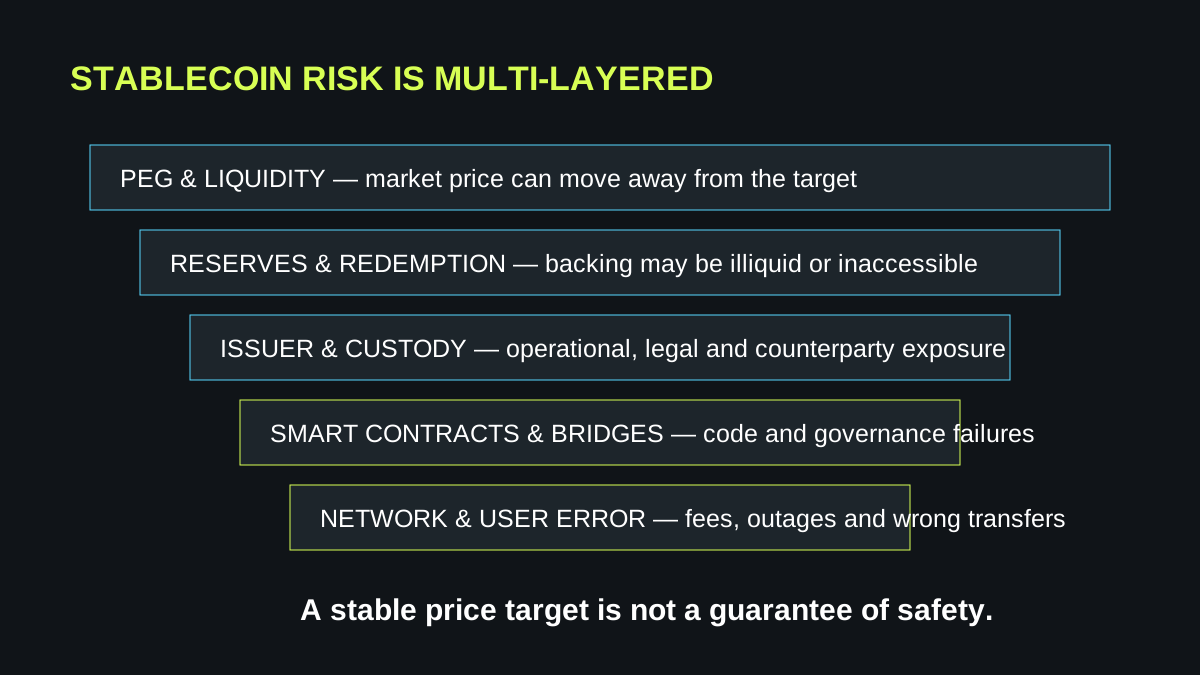
Stablecoins can fail through a broken peg, weak or inaccessible reserves, issuer or custodian problems, exchange failure, smart-contract exploits, bridge losses, network disruption, regulation or user error. The risk profile depends on the coin, the chain, the platform and how the asset is held.
Why stable does not mean risk-free
A stablecoin is designed to track a reference value, but the design can fail temporarily or permanently. Even when the market price returns to the target, a holder may still lose money through forced selling, platform restrictions, transfer mistakes or inaccessible funds.
Peg and liquidity risk
A token can trade above or below its target when sellers overwhelm buyers, redemption becomes uncertain or market makers withdraw. The headline price may also differ across exchanges. During stress, spreads can widen and the available order-book depth can disappear.
Someone who can wait may experience a different outcome from someone who must exit immediately. Risk therefore depends on both the asset and the timing of the obligation.
Reserve and issuer risk
Fiat-backed tokens depend on the quality, custody, liquidity and legal availability of reserve assets. A reserve report may show asset categories without proving that every holder has a direct and immediate redemption claim.
Issuer risk also includes operational failure, fraud, banking disruption, legal action and concentration among a small number of service providers.
Redemption risk
Some issuers redeem only for verified institutional customers or require minimum amounts. Retail users may depend on exchanges and secondary-market buyers instead. During market stress, that difference becomes important.
Custody and platform risk
Holding through an exchange or wallet service transfers key management to that company. The platform can be hacked, fail financially, suspend withdrawals or restrict an account. Self-custody removes that particular dependency but adds seed phrase, malware, device, phishing and recovery risk.
A strong stablecoin does not protect a holder from a weak custodian.
Smart-contract risk
On-chain tokens and protocols can contain bugs, privileged admin controls, upgrade mechanisms or oracle dependencies. Depositing a stablecoin into a lending or liquidity protocol adds the protocol’s smart-contract and economic risks on top of the token itself.
Bridge and wrapped-token risk
A bridged representation depends on the bridge contract, validators or custodians that connect two networks. It may trade under a familiar ticker while introducing a separate claim structure. Confirm whether the destination supports the native token or a bridged version.
Network risk
Congestion, fee spikes, validator failures, chain reorganisations and temporary outages can delay or block transfers. The coin may remain near its target while the holder cannot move it when needed.
Operational risk
Wrong networks, unsupported contracts, missing memos, copied addresses and deposit minimums are common causes of loss or delayed crediting. These errors are often irreversible or require manual support intervention.
Regulatory and legal risk
Rules can affect issuance, exchange access, redemption, reporting and whether a service is available in a particular location. Legal treatment may differ between the token, the platform and the activity performed with it.
Concentration risk
Holding all funds in one stablecoin, on one chain or with one provider creates a single point of failure. Diversification can reduce concentration but also adds complexity, more accounts and more opportunities for mistakes.
How to reduce risk
- Use current issuer and platform disclosures.
- Keep position size proportional to uncertainty.
- Avoid concentrating everything with one provider or chain.
- Separate stablecoin risk from yield-product risk.
- Verify the exact contract and network.
- Secure accounts before funding them.
- Test a new route with a small amount.
- Keep transaction records and recovery information.
Questions to answer before acting
- What happens if the token loses its peg?
- Who can redeem it directly?
- Where are reserves held?
- Can the issuer freeze transfers?
- What happens if the exchange stops withdrawals?
- Is the token native or bridged?
- Can I recover from a lost device or compromised account?
Compare options in the selection guide, follow the stablecoin transfer checklist, or return to the main buying guide.