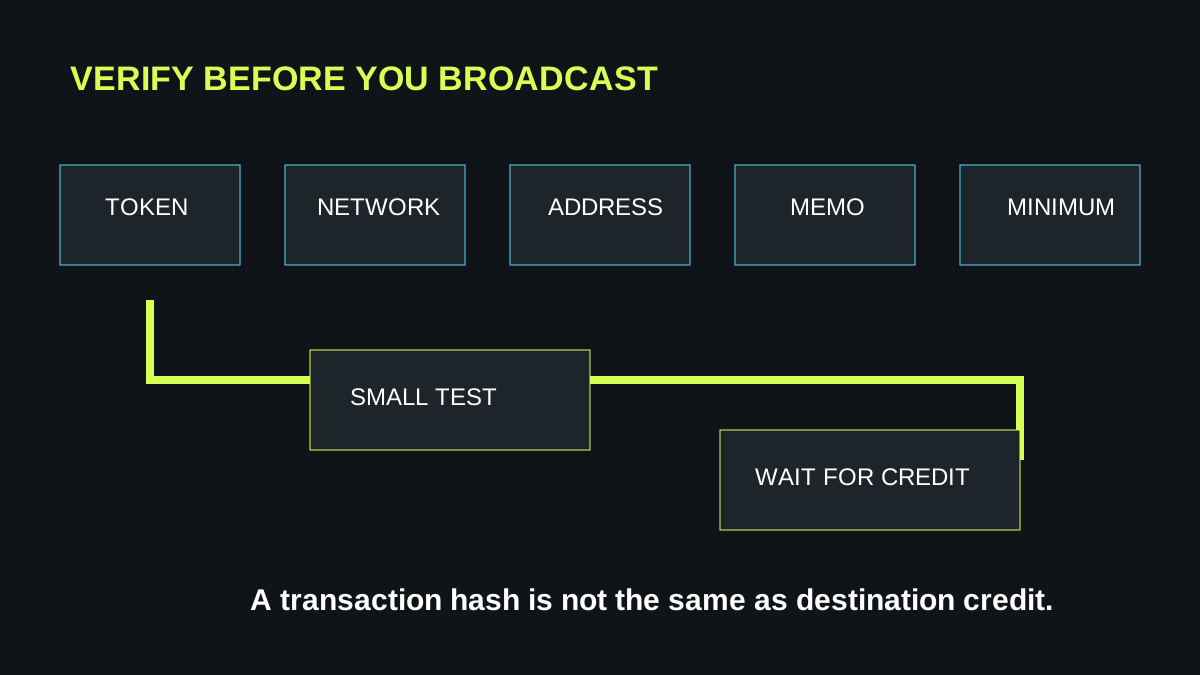
To send stablecoins safely, confirm the exact token and network at both ends, copy the destination address from the receiving service, verify address characters, check minimums and memos, review the fee, and use a small test transfer before sending the main amount.
Understand the four things that must match
A successful transfer requires the asset, token contract, blockchain network and destination instructions to match. A ticker alone is not enough because the same name can appear on several chains or represent native and bridged versions.
Confirm the destination first
Open the receiving wallet or platform and generate the deposit instructions there. Do not begin by choosing a withdrawal network on the sending platform. The destination determines what it can accept.
- Deposit status is active.
- The exact token is supported.
- The selected network is supported.
- The address format matches the network.
- Any memo, tag or reference is included.
- The amount exceeds the deposit minimum.
Match token and network
A dollar stablecoin on Ethereum is not automatically interchangeable with the same ticker on Tron, Solana or another chain. Sending on an unsupported network may result in permanent loss or a difficult recovery process.
When a platform offers several withdrawal networks, choose only the one explicitly shown on the destination deposit page.
Verify the address
Copy the address directly from the destination and compare the first and last characters after pasting. Avoid addresses sent through chat, email or advertisements. Clipboard malware can replace a copied address, so visual verification still matters.
For large transfers, consider an address allowlist if the platform supports it. Add the address in advance and verify it independently.
Check fees and minimums
The sending platform may charge a fixed withdrawal fee, while the destination may require a minimum deposit. A test amount that falls below the minimum might confirm on-chain but never be credited automatically.
Review the net amount the recipient will receive rather than only the network fee.
Use a test transaction
A test transfer validates the route, address and network. It should be large enough to exceed deposit minimums but small enough that a mistake would be tolerable. Wait for the destination to credit the funds, not merely for a block explorer to show success.
Review before confirming
- Token ticker and contract are correct.
- Sending and receiving networks are identical.
- Address characters have been verified.
- Memo or destination tag is included if required.
- Amount is above the destination minimum.
- Fee and net received amount are acceptable.
- The test transaction has been credited.
Track confirmations
After sending, save the transaction hash and open it in the correct network explorer. A completed blockchain transaction can still be pending at the destination while the service waits for more confirmations.
When a transfer does not appear
First confirm the transaction status, destination address, network, token contract, memo and amount. Then check the receiving service’s deposit status and required confirmations. Contact support with the transaction hash and screenshots, but never share a private key or recovery phrase.
Common transfer mistakes
- Choosing the cheapest network without checking destination support.
- Sending a wrapped or bridged token instead of the native version.
- Omitting a memo or destination tag.
- Testing with an amount below the deposit minimum.
- Trusting only the ticker instead of the contract.
- Sending the full balance before testing the route.
- Copying an address from an untrusted message.
Keep evidence
Save the transaction hash, sending account record, receiving account record, exchange rate and purpose of payment. These records can help with service requests, accounting and tax reporting.
Review stablecoin risks, compare options in the selection guide, or start with how to buy stablecoin.